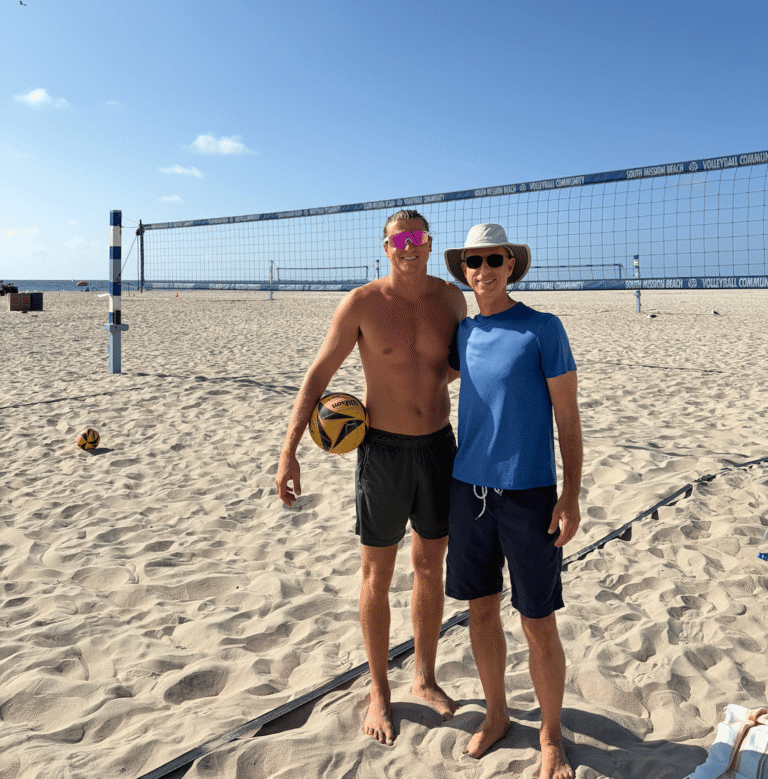
Dream came true getting breakfast with previous client Nir Eyal, NYT bestselling author of Hooked and Indistractable, last week in Singapore.
He challenged me to go standing wave surfing with him (he’s a pro)!
I conveniently couldn’t go as I had to move my flight up back to the US 😉
3 Secrets
1. First, Name Your Reader
You may have more than just one depending on your book. But here we want to get as specific as possible on who needs to be reading it. You can use a word doc, notepad, or powerpoint to organize the various attributes of your reader.
For example, let’s say my book is about alternative health for women.
Is your book for women of all ages? Does it just pertain to those under or over the age of 50? Under 50? Let’s get specific on the different people within the generalization and what they care about. Are they moms or does that not matter? They are moms?
So mom’s under the age of 50. We’re done right? Wrong. We need to get more specific.
For example, the specific socioeconomic, environmental conditions a mom in Wilcox County, Alabama faces are very different than a mom who lives in Manhattan.
Maybe your book is only for one of those moms?
Maybe your book is for both.
Either way, when we use our tools later on, we’ll want a message that speaks directly to that person, where they’re at in life and the environment in which they exist.
It’s best to develop 2-3 core reader personas to cover your primary audience segments. I love to use ChatGPT for this.
Me: “My audience is moms under the age of 50, can you give me 2-3 personas to cover my primary audience segments.”
ChatGPT: The “Mindful Multitasker”, The “Creative Caregiver”, and The “Ambitious Nurturer”.
ChatGPT then proceeded to give me details for each of those personas including age, life stage, Interests, pain points, goals, what they read, what media they pay attention to, and what message might resonate most with them.
Now that we have our reader personas we can tailor our approach for seeding each persona, equipped with what they care about and messaging that would resonate specifically with them.
Now that we know you’re trying to get in front of, we can figure out who and what they’re already paying attention to.
2. Amazon & Amazon Ads in 2025.
Where Amazon differs from other ads platforms is that Amazon doesn’t just make money when an ad is clicked but also when someone purchases a book. Therefore Amazon doesn’t simply choose the highest bidder but a combination of the highest bidder and highest likelihood to get purchased. This is why so many authors complain that despite incredibly high bids, they still can’t get Amazon to show their ads.
I think of Amazon Ads like I think of skiing and snowboarding. Snowboarding is hard to learn but easier to master, while skiing is easier to learn and harder to master. Amazon Ads are like skiing due to the lack of control Amazon gives you when running your ads. All you can really target are specific book pages and keywords that readers are searching for.
3 of the main data points Amazon uses to determine whose book has the highest likelihood of being purchased includes:
1. If keywords being targeted share keywords in your book description, title, or subtitle
2. If a book being targeted shares positive reviewers and readers with the book being advertised,
3. Current sales velocity of your book (If your book is already selling, it indicates to Amazon that people want to buy it which is why we focus so much on improving our clients Amazon Ads through non-Amazon activities),
A majority of non-fiction authors are running Amazon Ads to drive readers to some back-end offering. Those authors are willing to pay much more per click than authors trying to breakeven on their Amazon Ads which is why Amazon Ads are not usually effective for non-fiction authors who want to make enough money in book sales to cover the cost of their Amazon Ads.
Lastly, there’s a myth that it doesn’t make a difference whether you include ad text or not in your sponsored product campaigns.
With over $10 Million spent on Amazon Ads, we’ve found that to be completely busted. Ads that die or stop getting impressions do so because Amazon has shows that combination of targeting + text + product to a majority of the available audience and it hasn’t performed well enough for them to keep showing it. By launching campaigns with new ad text, you’re giving Amazon something new to try.
I would not spend a dime on any paid Amazon Ads course. Most of those courses are outdated, and methods are based on success authors had ten years ago. There’s enough free stuff out there (like the free Amazon Ads course that Kindlepreneur.com offers) to get you up to speed on how to run those yourself. Amazon Ads will never be the thing that puts you on the NYT list by itself, but it can be an effective way to seed copies into the wild while you sleep.
3. Here’s a few unscientific ways I’ve made sure I’m working with the best and being the best for Virtual Assistants to work with:
-I’ve often found when my gut tells me someone isn’t working that hard, despite what they say, they aren’t. You’ll know simply by their output when you’ve found the right VA for a task.
-Record the training you do with your assistants on Zoom or whatever other platform that allows you to record virtual meetings. Since it may take you a few VA’s to find the one you’re looking for, it’s helpful to be able to just share those trainings with new VA’s instead of needing to train someone from scratch again.
-If you have friends or colleagues who have a great VA, I believe the best talent comes from referrals. Otherwise, I recommend a platform like onlinejobs.ph. Now hire almost exclusively through team referrals.
-Set weekly objectives and set up a weekly recurring meeting to review work together and answer any questions.
Pay for your assistant to have some level of ChatGPT and encourage them to use it in their daily work.
Yes, it takes time to bring someone on and may sound exhausting, but you can literally 10x your productivity down the road and set yourself up to not burn out.
2 Links
- Currently reading Made to Stick by Dan and Cheap Heath and loving it. Excited to apply their foundations for making my messages stickier in team meetings, finalizing the manuscript Before The Bestseller, and in these newsletters (not a paid endorsement just thought I’d share something I’m enjoying).
- For those who didn’t have a chance to listen yet, Allan Dib (1+ million copies sold) and I talk about all things book marketing in 2025 here.
1 Quote
“Strength and growth come only through continuous effort and struggle.
~Napoleon Hill
with love and sincere appreciation,
Alex